
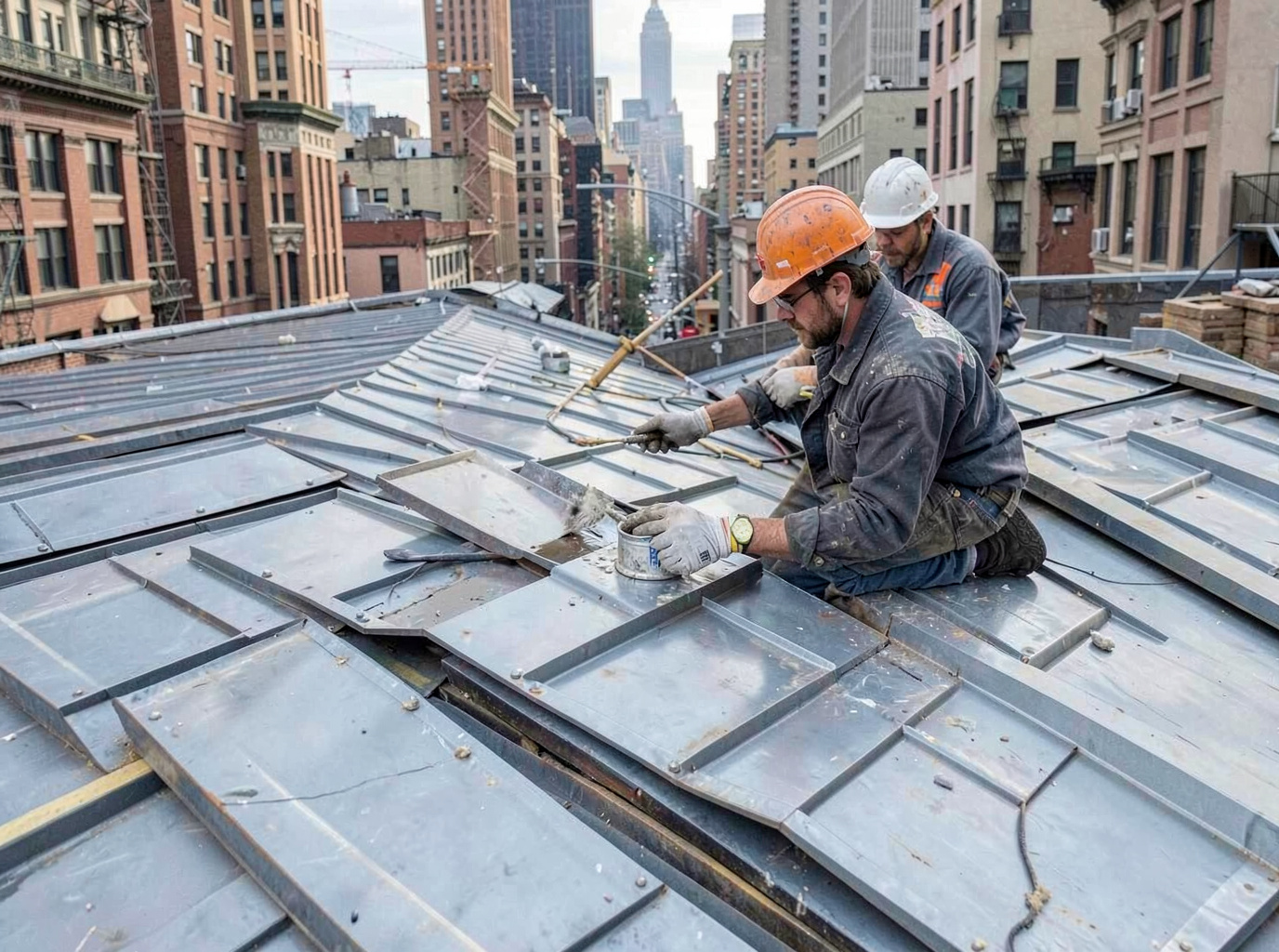
Manhattan's humid continental climate brings wide temperature swings that cause metal panels to expand and contract daily. Proper clip spacing and thermal breaks prevent oil canning and fastener pull-out on homes in Westside and Manhattan Valley. Crews account for higher wind loads along the Flint Hills corridor and heavier snow accumulation near Tuttle Creek Lake when selecting gauge and seam type.
Many homes around Kansas State University and Downtown Manhattan date from the early to mid-1900s with irregular rafter spacing and older sheathing. Installers inspect for rot and add strapping or new decking before laying panels to meet Riley County requirements. Junction City crews often see the same stock and bring matching techniques when jobs cross county lines.
Standing seam systems with concealed fasteners perform best here because they shed heavy rain and resist uplift better than exposed-screw options. Homeowners near Aggieville frequently request cool-roof coatings to reduce attic heat gain during summer peaks. Edge details at valleys and penetrations receive extra flashing layers to handle ice dam runoff once winter temperatures drop.
Technician insight
In Manhattan, the thing that catches most people out with Metal Roofing Installation is underestimating how much older rafter spacing on pre-1960 homes near Aggieville shifts once you add the weight of metal panels and insulation during a cold snap.
Westside Home Overlay
Homeowner in Westside needed a new roof before another winter. Existing shingles were cupping and trapping moisture. We installed a standing seam overlay with added ventilation strips. The panels now handle temperature swings without buckling and improved attic temperatures near Tuttle Creek Lake.
Metal Roofing Installation Services We Offer
✓Standing Seam Metal Roofing
Concealed-fastener panels installed over new or existing decking for superior leak resistance on homes in Riley County.
✓Metal Roof Over Shingles
Direct overlay systems that add a new metal layer without full tear-off, common on Westside and Manhattan Valley properties.
✓Screw-Down Metal Panel Installation
Exposed-fastener panels suited for agricultural buildings and simpler roof shapes around Tuttle Creek Lake.
✓Metal Roof Flashing and Edging
Custom-fabricated valley, ridge, and eave trim matched to existing metal or asphalt roofs in Downtown Manhattan.
✓Insulated Metal Roofing Systems
Panel systems with integrated insulation to manage condensation during Manhattan's cold winters near Kansas State University.
Metal Roofing Installation Cost in Manhattan, KS
| Service | Typical Range | What Affects It |
|---|---|---|
| Standing Seam Installation | $8–$14 per sq ft | Higher end for complex roofs near Downtown Manhattan or steep pitches |
| Screw-Down Panel Installation | $5–$9 per sq ft | Lower cost option for simpler shapes in Westside |
| Metal Over Shingle Overlay | $6–$10 per sq ft | Price moves with existing layer condition and ventilation needs |
| Flashing And Trim Work | $1,200–$2,800 | Custom fabrication for multiple chimneys or skylights common near KSU |
Ranges are typical for Manhattan, KS and confirmed with an exact written quote before any work starts.
How it works
- 1
Site Assessment
Measure the roof, check deck condition, and note access limits on streets around Aggieville or Flint Hills Discovery Center.
- 2
Material Selection
Choose gauge, color, and seam style based on wind exposure near Tuttle Creek Lake and local Riley County wind zones.
- 3
Deck Preparation
Repair or replace sheathing, add ice-and-water shield at eaves, and install underlayment suited to Manhattan's freeze-thaw cycles.
- 4
Panel Installation
Lay panels with proper clip spacing, seal all penetrations, and install matching trim for thermal movement.
- 5
Final Inspection
Walk the roof, verify fastener torque, and confirm drainage before cleanup on Junction City or local jobs.
Pricing
Pricing varies by square footage, panel gauge, seam style, and roof access in older Manhattan neighborhoods.